
Ballenger Creek Previous Residents by Era
Work in dated steps. Frederick County sources point you first to the parcel, then to the recorded transfer, the legal layout, any administrative activity, and finally historical leads about the people themselves. No single record settles the question. A deed party might be a lender, an estate, a trustee, or an earlier owner rather than the person who actually lived in the house. A local-history source can connect a family to a neighborhood but still needs a record date and a clear tie to the address. Each source in a Ballenger Creek residents directory search carries its own strengths and limits.
| Source | Years It Covers | Where Held | What It Shows |
|---|---|---|---|
| Frederick County GIS and SDAT property card | Current electronic service; historic cutoff not located | County GIS and Maryland SDAT | Parcel identity, normalized address, tax account, deed reference, and cross-links |
| MDLandRec deed index and images | Current electronic index; Frederick cutoff not located | Maryland Land Records and Circuit Court Clerk | Grantor, grantee, instrument, recorded date, book/page, remarks, and available images |
| PLATS.NET series | Series-specific spans from 1701 through 2002 | Maryland State Archives plat portal | Lot, block, subdivision, road, right-of-way, and legal-layout context |
| Maryland Room, Heritage Frederick, and MSA directory guide | 1875 verified Frederick listing; obituaries since 1932; other dates vary | Frederick local-history repositories and Maryland State Archives | Dated family, property, newspaper, directory, and archival leads |
| County permits and planning files | Current portal; historic start not located | Frederick County Planning and Permitting | Permit or inspection chronology tied to a property address |
Start with the current parcel whenever the address is known. When you have only a surname, a neighborhood reference, or a family event, begin instead at the Maryland Room or Heritage Frederick. Move from the broad lead toward something exact. That may be a precise parcel number, deed book and page, or archival citation. A search result is a clue, not a conclusion.
Ballenger Creek Past Residents Start Here
The county parcel service connects a street address to the land-record trail. Save every field it returns. These include ADDRESS, ZIP, PIN or TAX_ACCT, MAPPARCEL, TAXMAP, TAXGRID, PARCEL, BOOKPAGE, WEBPLAT, WEBLINK, subdivision, acreage, and last-update value. These identifiers carry you into other systems. None of them proves a named person lived at the house. Ballenger Creek rows appear under both “BALLENGER CREEK RD” and “BALLENGER CREEK PIKE,” and some include a lettered unit. The exact normalized result matters.
The state property card sits behind the GIS WEBLINK. SDAT searches by county, address, street, account identifier, or map reference. Its own guide notes that owner name, town, neighborhood, subdivision, and ZIP searches are not supported. Owner name, town, neighborhood, subdivision, and ZIP searches are not supported. Pick Frederick County, county code 11. Type a complete street name with no direction or suffix. If a house number fails, the guide suggests dropping the number or truncating the street name with an asterisk.
For historical context alongside a parcel lead, the Heritage Digital History Library rounds out Ballenger Creek address-history research.
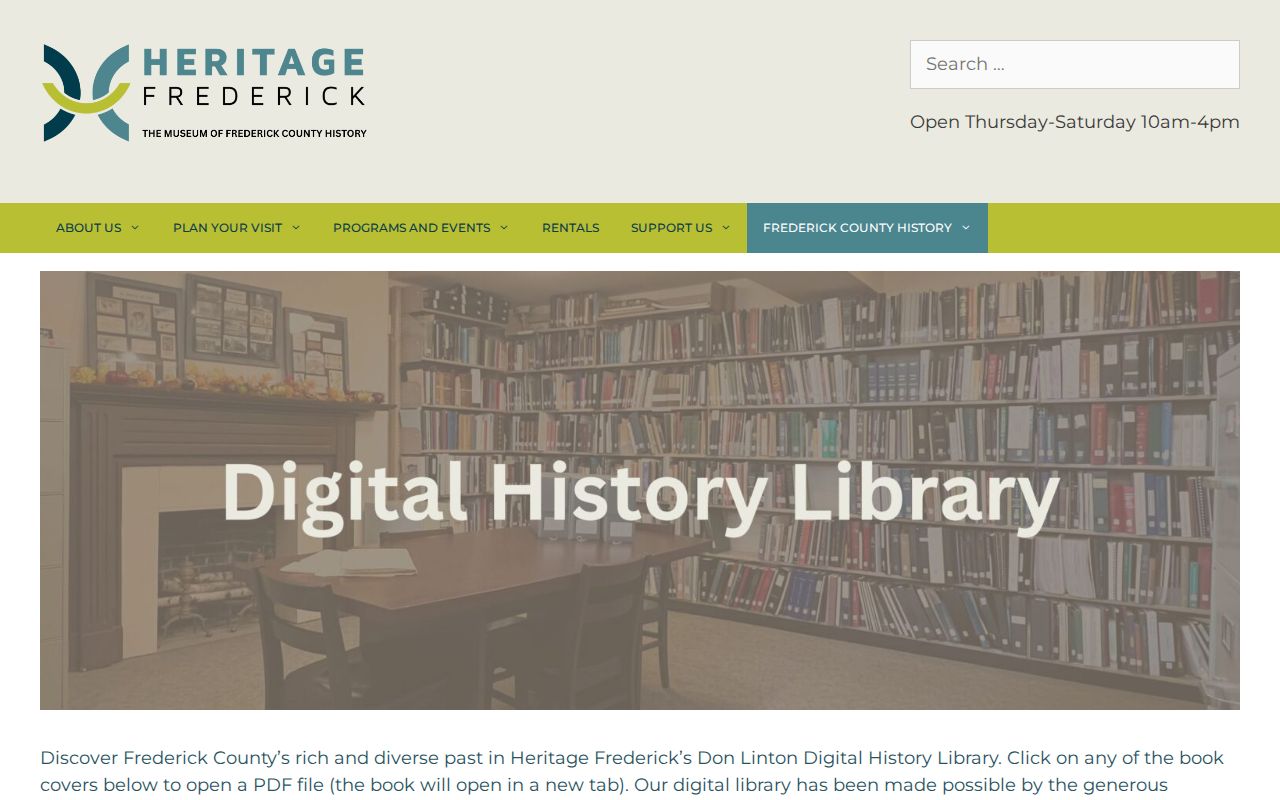
The library holds searchable PDFs of county house histories, diaries, local histories, and images. Each can add a dated lead, but the parcel and the original record still anchor any Ballenger Creek address trail.
Trace Ballenger Creek Deed Records
For the recorded-transfer trail itself, carry the book/page from GIS or SDAT into MDLandRec. Version 5 requires a free account, even for former users. Its index handles Frederick County, party names, match options, party type, document type, remarks, book/page, and several date choices. It also offers sorting and a direct book-page jump. Each result row can display the recording date. It can also show grantor and grantee, instrument type, book/page, and remarks. Follow an instrument link or a book/page number to the image or PDF itself.
- Record the parcel identifiers and BOOKPAGE from county GIS, then open the SDAT card only to confirm the parcel reference and current property details.
- In MDLandRec, select Frederick County and use the book/page jump or the documented party and date fields to find the recorded transfer.
- Capture the grantee, grantor, instrument type, date recorded, book/page, remarks, and the image reference when it is available.
- Read the deed image for a prior reference, legal description, and the parties’ stated roles. A recorded party is not automatically a resident.
- Search the transferor as a grantee in an earlier acquisition, then repeat the sequence while the parcel description still matches.
- When an image, older index, or question is unavailable online, contact the Frederick County Circuit Court Clerk’s Land Records or Records Room, the Maryland State Archives, or Heritage Frederick.
- Grantor
- The party transferring an interest in a recorded instrument. The role is stated for that document and does not prove residence.
- Grantee
- The party receiving the recorded interest. Searching that name in an earlier deed can reveal the preceding transfer.
- Chain of title
- A chronological sequence of recorded interests tied to the same legal parcel, tested through deeds and their references.
- Legal description
- The lot, block, subdivision, metes, or other land wording that helps match the same parcel when a street address changes.
The MDLandRec deed-chain guide walks through the book/page and prior-reference workflow behind a backward Ballenger Creek address search.
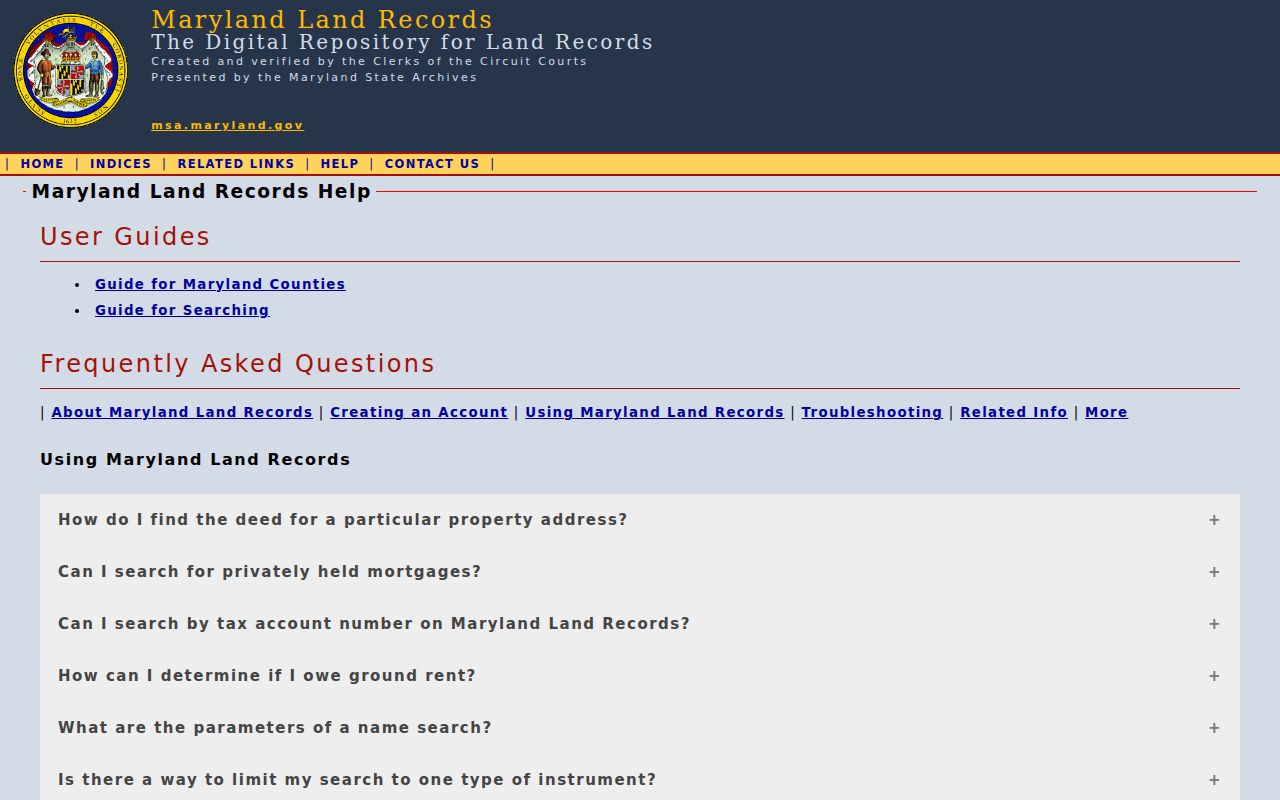
Treat the guide's examples as navigation aids only. They are not live Ballenger Creek deeds, and no index substitutes for a title opinion.
Ballenger Creek Address Records and Plats
PLATS.NET supplies the legal-layout layer around a deed chain. The Frederick County portal searches by basic book, page, plat or box number, and right-of-way. Advanced search adds date, description, book or plat number, page, clerk initials, and sort order. Series search works with qualifier, series, series unit, and sort order. A plat can explain a subdivision. It can also explain a lot and block, a road, an easement, or a parcel's creation. It will not tell you who occupied a structure.
Frederick's series span different eras. Patents run from 1701 to 1983. Division plats run from 1724 to 1920. Plats from land records run through 1949, and state road plat books run through 2002, among others. Read the series-specific date range before assuming a particular subdivision will show up. For Ballenger Creek this layer is worth the effort. Current parcel cross-links can preserve WEBPLAT alongside BOOKPAGE.
Note: A plat date marks a legal layout or related action, not a move-in, construction, or household date.
Ballenger Creek Records Research Help
When a record chain stalls, Heritage Frederick property research offers a stated property-history service. The service traces a deed chain and returns digital deed copies and historical descriptions. It runs two hours for $50. Added time costs $25 per hour. Heritage Frederick does not guarantee a result. That matters when the trail has gaps or the address changed form over time.
Send the address, parcel identifiers, BOOKPAGE, WEBPLAT, SDAT WEBLINK, date range, and the sources already checked. The organization also performs general historical research by appointment. Its Research Center holds manuscripts, newspapers, photographs, and ephemera. The Digital History Library supplies searchable local material. This route keeps citations intact. It also keeps a complicated address history from collapsing into unsupported name matches.
The Heritage Frederick property-history research page describes the service available for a Ballenger Creek address-history trail.
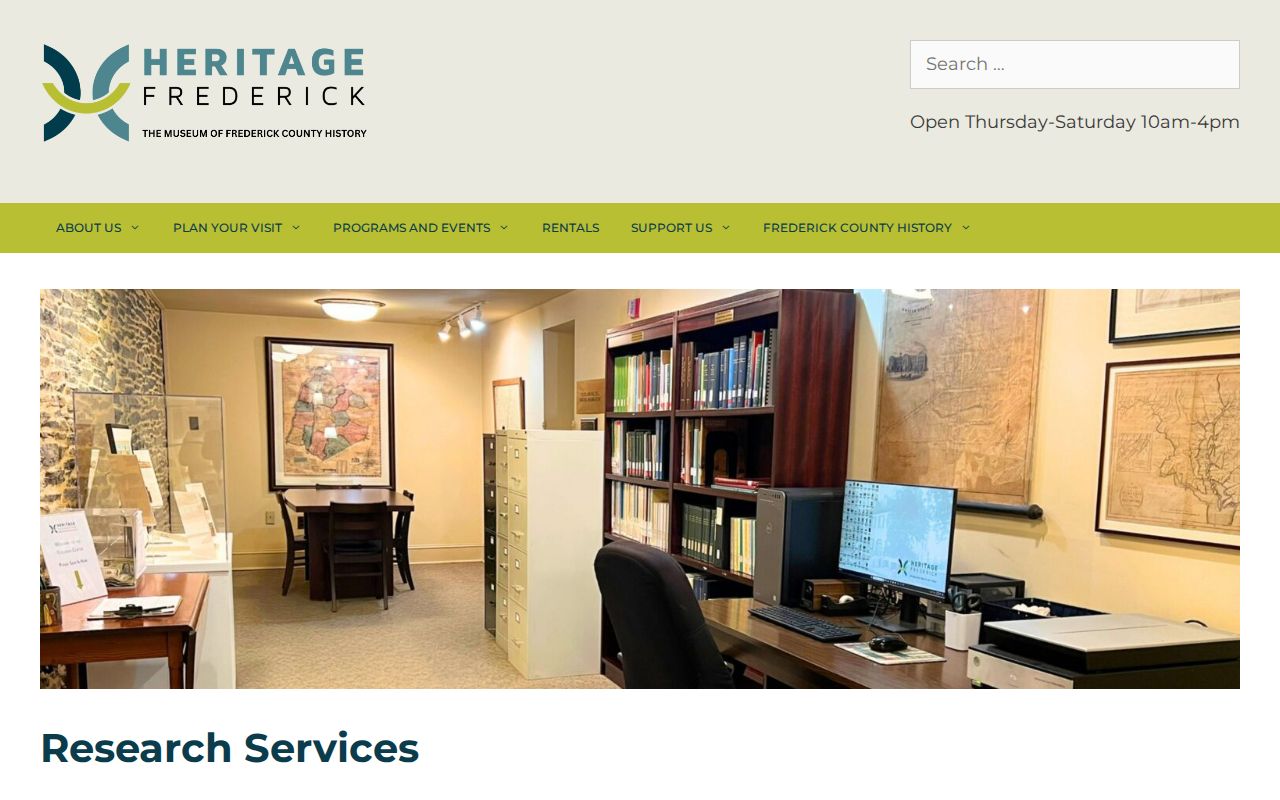
The service can organize deed copies and land descriptions. The citations and original land records it returns remain the facts you evaluate for yourself.
Ballenger Creek Past Resident Evidence
Ownership papers answer only part of a past-residents question. Obituaries often fill the human gap. The FCPL Maryland Room's Linton Obituary Collection reaches back to 1932. It holds more than 250 surname-arranged card drawers drawn from the News-Post and regional papers. Staff pull the cards for you. Give them a name and a date range. A card may identify relatives or a community. It may also list an event, a printed address, or a publication date. Treat each of those details as a lead that needs its own dated citation.
The one confirmed Maryland State Archives directory item is a Frederick listing in Boyd's 1875 business directory. That is not a continuous Ballenger Creek household directory. The collections themselves appear on the Ballenger Creek city directory page. Their access limits and archival context appear there too. Never turn a business listing or an obituary into proof of residence. A name index alone never says a person lived at a particular address.
Ballenger Creek Past Residents in Census
Census material can supply household context around a dated address lead. It is available through FCPL research tools and the Maryland State Archives. Start with the deed or parcel date. Then line up a census image, a newspaper item, an obituary, or a local index. Pick from the closest relevant period. Keep each source's own date. A census household and a deed party may be related. They answer different questions, so treat them as separate evidence rather than identical proof.
- Set out the dates already documented by GIS, the recorded deed, plat, permit, or local-history item.
- Search the Maryland Room, HeritageQuest, or Maryland State Archives finding aids for a fitting household or county record.
- Copy the source title, date, page or image reference, spelling, and place wording before comparing names.
- Test the address link through the legal description, subdivision, street form, or another original record where the sources agree.
- Mark the connection as unresolved when the evidence cannot distinguish the person from another person of the same name.
This caution matters doubly in Ballenger Creek. The modern community arose much later. Frederick County's earliest land records predate it, so an older county reference may concern the land itself or a family connection rather than a later neighborhood address.
Ballenger Creek Address Record Gaps
Address history has continuity traps. Frederick County GIS distinguishes road forms, pike forms, lettered units, and subdivision references. One book/page can cover several lots. Match the legal description, subdivision, lot, and parcel. Do not rely on a street number alone. A deed can involve a trust, corporation, estate, or representative, and a historic GIS flag does not identify a former resident, while a plat date does not date occupancy.
No documented street-renumbering schedule, courthouse fire, missing local volume, or Sanborn run exists for Ballenger Creek. Never invent an explanation for an absent name. Try spelling and suffix variants next. A prior book/page, the historical jurisdiction, and Maryland State Archives series are worth checking too. Save your negative searches. Note each source, search term, and date, so the next researcher knows what was tested.
Ballenger Creek Previous Resident Limits
Address-history records serve family history, estate questions, a property's documented past, and civic research. Stay at the record level. Keep unneeded personal details out of your notes. State each source date and record role. A public parcel map or a historical mention is never permission to build a profile of a living person.
Lawful use. Use Ballenger Creek address-history records for careful historical or personal research. Do not use record details to contact, track, profile, harass, or harm any living person.
Some county records stay out of reach through their ordinary office channel. A focused request under the Maryland Public Information Act can then describe the address, parcel, record type, and date range. That access has limits. It does not override exemptions, redactions, or protected-address rules. The Maryland Safe at Home program also requires special handling for protected participants.