
Ballenger Creek City Directory Holdings
Ballenger Creek is unincorporated. Its directory history lives at the county and state level. There is no Ballenger Creek city office with a shelf of household volumes. The Maryland State Archives finding aid places Frederick material in the Washington County Free Library Collection. It is filed under MSA SC2779. That collection includes Boyd’s Business Directory of Maryland for 1875. Note the word business. The title may cover firms rather than households. No continuous modern Frederick residential run, criss-cross series, or Ballenger Creek-specific household volume appears in these holdings. That gap is itself useful evidence for a residents directory search.
| Collection | Years | Where Held | Access |
|---|---|---|---|
| Boyd’s Business Directory of Maryland, Frederick listing | 1875 | Maryland State Archives guide, MSA SC2779 finding aid | Guide online; inspect the identified microfilm holding |
| Maryland Room local-history books and indexes | Dates vary by item | C. Burr Artz Library, Frederick | Noncirculating, consult staff or catalog |
| Linton Obituary Collection | Since 1932 | FCPL Maryland Room | Staff handles surname-arranged cards |
| Heritage Digital History Library | Dates vary by searchable PDF | Heritage Frederick online collection | Online material; permissions may apply |
Treat the table as an access map. It promises no complete list of names or addresses. A nineteenth-century Frederick listing cannot directly cover a community whose principal development came after the 1980s. For later Ballenger Creek families, local indexes and address-linked land records usually offer the stronger starting points.
Ballenger Creek Maryland Room Records
The FCPL Maryland Room substitutes for the missing directory. It operates inside the C. Burr Artz Library at 110 E Patrick Street in Frederick. The collection does not circulate. Hours run Tuesday through Thursday, 10 to 7; Friday, 10 to 5; and Saturday, 12 to 5, with the room closed Sunday and Monday. Call 301-600-1368 first. Card files and microfilm take extra planning. The room holds more than 11,000 local-history volumes. Its genealogical anchors are the four-volume John Stanwood Martin Genealogical Index to Frederick County, about 30 Martin source works, and the O’Donoghue Index. Those tools point toward deeds, wills, church records, biographies, and local publications. They supplement rather than replace the original record. Personal-papers descriptions add civic, school, planning, veterans, radio, and biographical material. Access and processing vary by collection. A view of the FCPL Maryland Room shows the local-history source used for Ballenger Creek archival research.
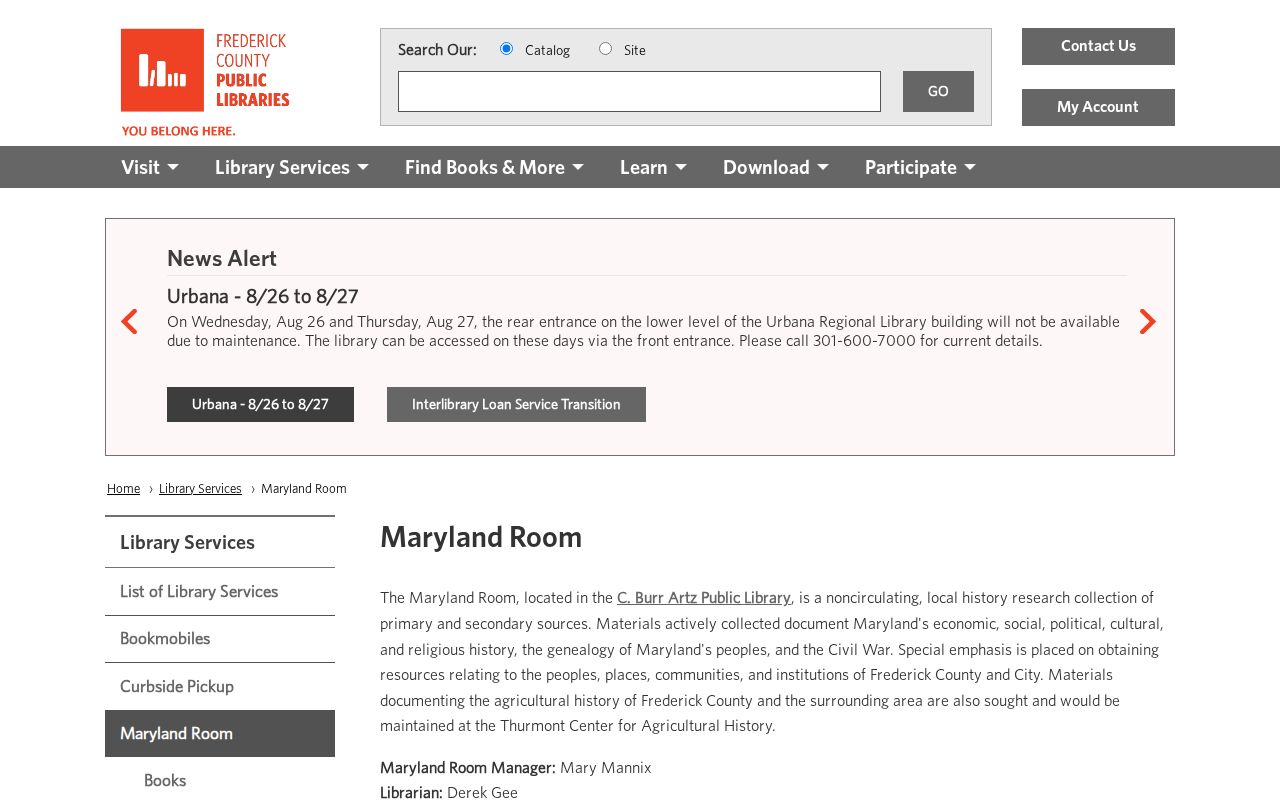
In-person visits matter here. Obituary cards, reference books, and some microfilm are handled through staff. A public name search is not offered for these. Written questions work best with detail. Give the full and variant surname, any known address, and the date range. Also list the sources already checked. The FCPL Maryland Room contact form also asks whether digital copies are needed. Local reference items generally do not loan. The documented library-system transition makes direct contact especially useful for urgent research.
Ballenger Creek Archive Records Limits
The Maryland State Archives directory guide verifies the 1875 Boyd’s Frederick listing. It also identifies the collection placement. It shows no uninterrupted series of printed volumes. No image confirms what every Boyd’s entry contains. The archives offers no complete digitized Ballenger Creek household directory either. Record the volume title, date, page or image reference, and exact spelling with each search result. Add the collection name too. Jurisdiction checks matter. A Frederick City entry may mislead. The city name feels close to Ballenger Creek, yet it belongs to a separate jurisdiction. Each layer is distinct. Mailing city, ZIP code, county parcel, CDP boundary, and municipal boundary are different things. Match the place the source states before connecting any person to Ballenger Creek. The Maryland State Archives Frederick County guide gives the broader archival route.
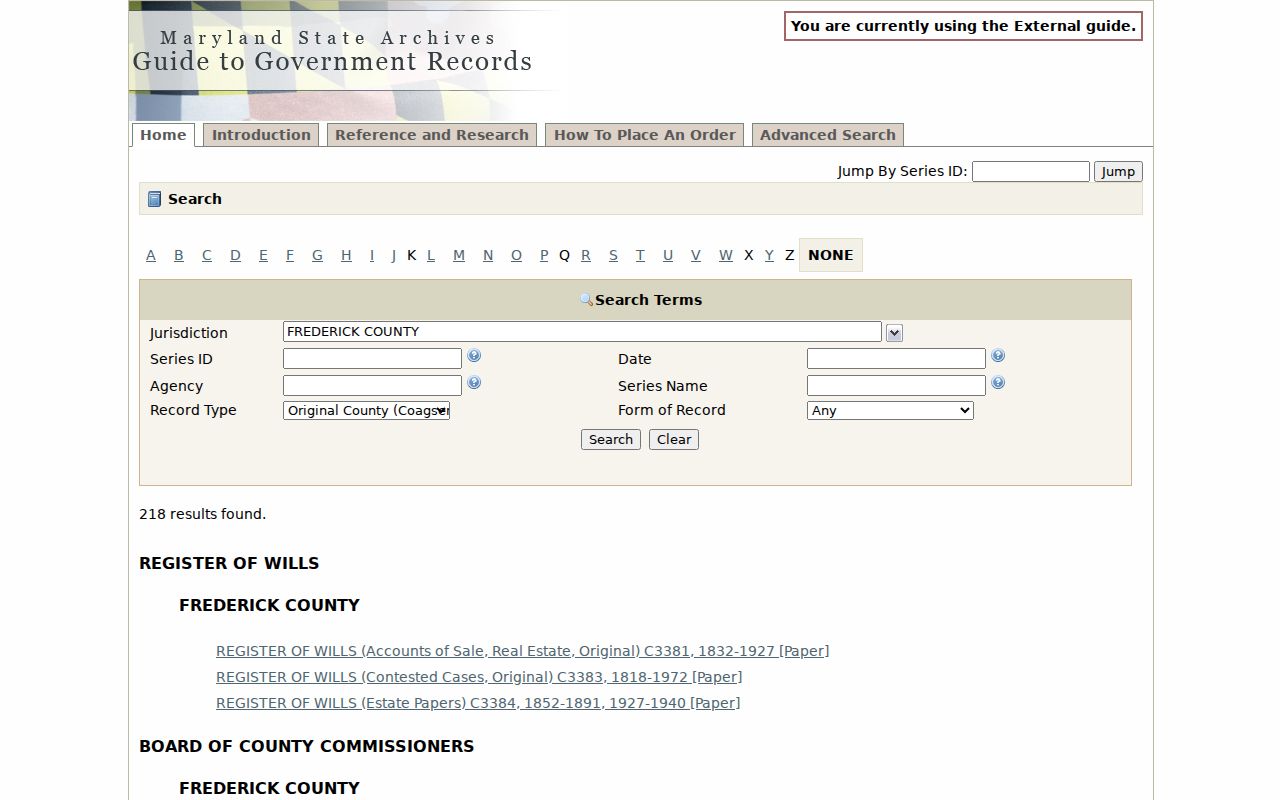
The guide links many record series. Land, court, estate, vital, census, and election records all appear. Together they can corroborate a thin directory lead. Note: A missing name can reflect a collection gap, a spelling difference, or a different jurisdiction, not an absence of local connection.
Reading Ballenger Creek Directory Evidence
A directory entry proves only what it prints. The confirmed Boyd’s item has no surviving entry page. So claims about streets, household relationships, or business classifications would overreach. Preserve the field that appears. Label missing data as missing. The same discipline applies to an obituary card, a newspaper clipping, a local index, or a Heritage property file.
| Printed name or business name | Record exact spelling, initials, and variants before linking it to another source. |
|---|---|
| Place wording | Keep the city, establishment, street, or community wording only when it appears in the item. |
| Date and source | Save the directory year, paper date, index title, collection, page, card, or image reference. |
| Classification or description | Preserve a business label or other printed description without expanding its meaning. |
| Linked material | Note whether the source is a microfilm finding aid, a staff-held card, a scan, or a paid research result. |
- Criss-cross directory
- A directory arranged by street and address rather than by surname. No verified Ballenger Creek run was located, so use the term only after a holding is confirmed.
- Householder index
- An index that groups a dwelling with a named household contact, when the volume provides one. It is not evidence that every listed person occupied the address.
- Abbreviation key
- The publisher’s explanation of shortened labels. Photograph or copy it when present, because its meaning belongs to that edition.
1875 Frederick Directory Context
The 1875 Boyd’s listing is the clearest directory-era marker for Frederick. It sits in Frederick material, not in a documented Ballenger Creek resident roll. Frederick County dates to 1748. Maryland State Archives finding aids reach even further back. They run through land, road, patent, court, probate, and poll-book series. Some land predates modern Ballenger Creek development. An address there calls up a longer county record trail, and it often beats any printed directory.
Dates matter with historical series. The archives list land-record series spanning 1748 to 1851, 1851 to 1959, and 1867 to 1971. They also hold mortgagee indexes from 1867 to 1936 and judicial land-record proceedings from 1866 to 1989. These series describe county record-keeping rather than a complete person list. Use them to pinpoint a land or court source. Then turn to the original custodian or its finding aid.
- 1748: Frederick County was formed from Prince George’s County.
- 1875: The MSA finding aid verifies the Boyd’s Frederick directory listing.
- 1932: FCPL’s Linton obituary card collection begins its documented coverage.
- Modern access: GIS, SDAT, MDLandRec, and PLATS.NET now provide cross-links that point researchers back to county records.
The Maryland State Archives directory guide documents the 1875 Frederick holding.
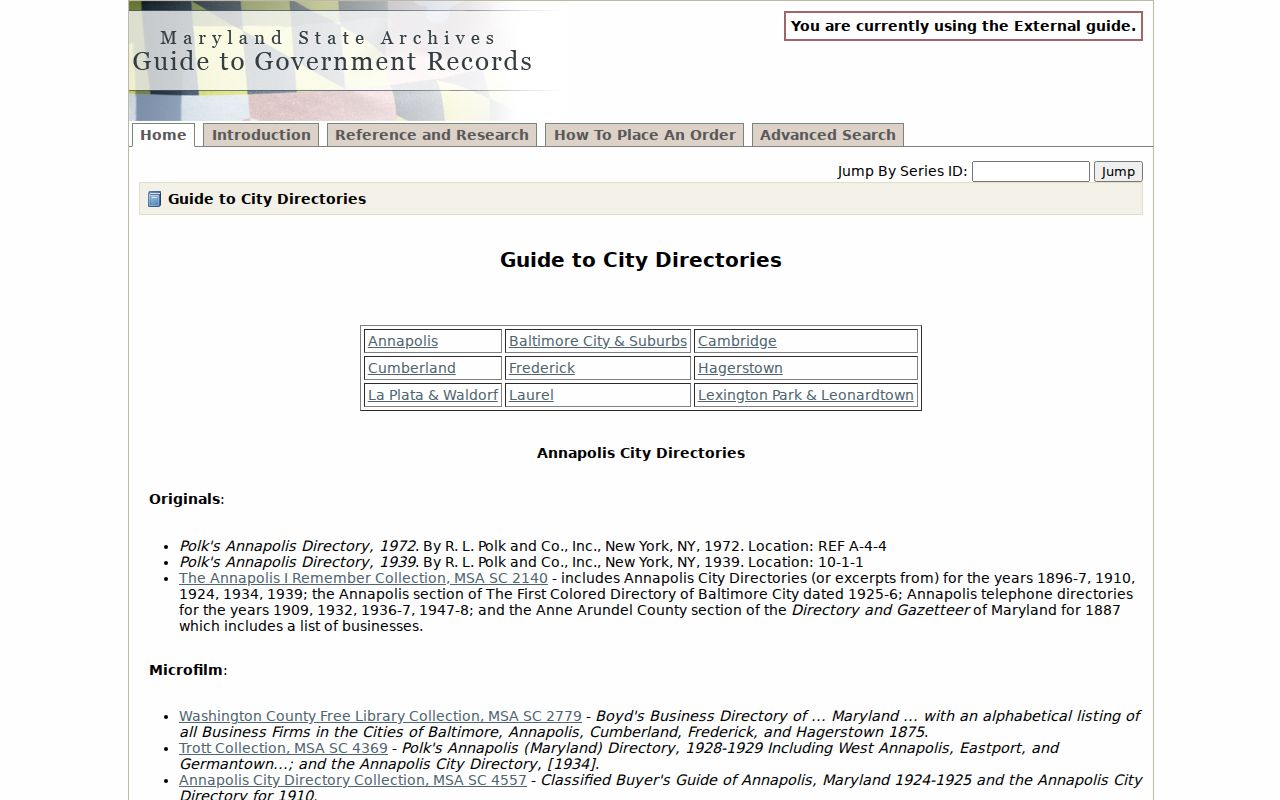
The value lies in what it does honestly. It records the holding and its year without claiming a full run of later residential volumes for the area.
Trace Ballenger Creek Directory Leads
Treat a Ballenger Creek directory lead as one dated stop on a family-history trail. The next source depends on the item itself. A surname in a local index may point toward a deed. It may also suggest a will, a church record, or a biography. Obituary leads go through the Maryland Room's staff-held Linton cards, which reach back to 1932. A newspaper mention is worth preserving with its title, date, page or image URL. Save the exact stated relationship to the community too. That detail anchors the lead in the wider residents record trail.
- Copy the entry exactly, including spelling, place wording, source title, and date.
- Search the Maryland Room catalog and indexes for the same surname, variants, and a fitting date range.
- Compare the result with a newspaper, obituary, archival finding aid, or original county record rather than relying on a transcription.
- Use census material available through library research tools as household context, while keeping the census year distinct from the directory or newspaper date.
- Record a negative result and move to another repository when no verified local directory covers the period.
Old city directory volumes serve person and family trails best. For current address-linked parcel work, the Ballenger Creek street directory fits far better. Let the old records answer historical questions, not modern ones.
Ballenger Creek Directory Obituary Leads
The Linton Obituary Collection reaches back to 1932. Its more than 250 card drawers are arranged by surname. Staff handle the files for you. Send a name and date range ahead of your visit. A card can point to relatives, a funeral home, a neighborhood, an address, or a publication date. That makes it a strong starting lead for anyone tracing past residents of Ballenger Creek through obituary clues. Coverage is not complete. Every clue still needs a copy of the source. A second record can also help it hold up.
FCPL adds microfilm reels, the Lighter clipping collection, and local newspaper access. These go beyond the card drawers. The Frederick News-Post Archive is not available remotely through the library. The Frederick Post online archive, however, can be searched from anywhere. For older papers, Chronicling America provides page-image searching of historic titles. Keep any clipping as a dated item. Then test its claim against the original record whenever one exists.
Note: Obituary cards and newspaper images are leads. Match each name against dates, place wording, and independent records.
Ballenger Creek Historical Records Help
Heritage Frederick research services offer a second local route. That route helps whenever the Maryland Room holdings leave a family or property question open. Visitors can book appointments at the center. The center keeps manuscripts, newspapers, photographs, and ephemera on hand. Its Digital History Library holds searchable PDFs. These cover county house histories, diaries, local histories, and images. Reproductions may carry permissions, and results are never promised in advance.
The charge is a flat $35. The organization provides one hour of general historical research, up to ten digital reproductions, a summary, and citations. Its property-history service covers two hours of deed-chain research for $50. Digital deed copies and historical descriptions are included, and added time is priced separately. Either option suits a Ballenger Creek directory clue that needs a locally grounded record trail. The cited copies, not the summaries, are the evidence worth keeping.